
How AI Will Change Us
source / credit
Published in Noema Magazine by Houda Nait El Barj | June 25, 2026
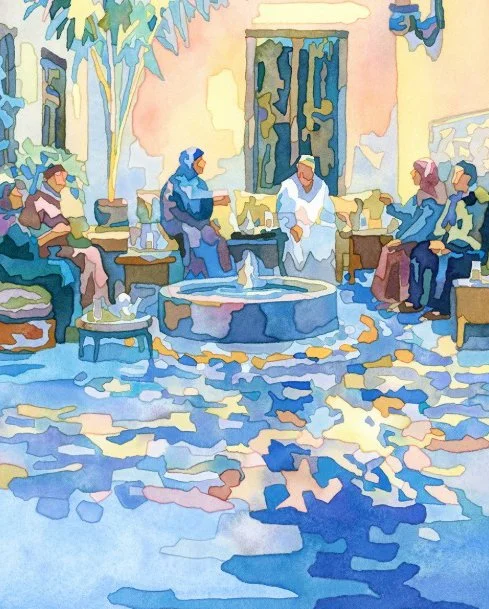
Musubu Hagi for Noema Magazine
When the most patient, well-read, emotionally responsive conversationalist in the world is always available, what will we still need from one another?
[…]
There is a word in Moroccan Arabic, nashat, that gets at what this felt like. It translates poorly. Joy of life, roughly: the belief that to be alive at all, in a body, among other bodies, is already reason enough to be glad. Nashat is neither a production nor an outcome; it is what rises when people show up.
I grew up with this word, and with the slow understanding that in my grandmother’s world, intelligence mattered less than presence. The village doctor was respected, but the woman who baked the best bread each morning was revered. A person’s place was established not by what they knew but by whether they came.
[…]
German philosopher Martin Heidegger used a word for the condition we all arrive at: Geworfenheit, or thrownness. We do not choose the world we are born into; we are “thrown” into bodies, languages, families, histories, religions, class structures and wounds that precede us. This is the part of being human that technology has the hardest time touching. Technology never lands on a blank slate. It lands on people already trying to figure out who they are and what kind of life counts as good.
AI is landing there. It is touching the places where we seek recognition, reassurance, guidance, intimacy and meaning. And as intelligence becomes abundant — cheap, personalized, conversational, tireless — the shape of scarcity is shifting.